battle, major, medieval
Second Battle of Homs
Second Battle of Homs was a battle fought on 29 October 1281 at Homs, in what is now Syria. It was part of Mongol invasions and conquests, which ran from 1206 to 1337. The recorded result: Mamluk victory.
See it on the globe Read the article

Where it sits in Mongol invasions and conquests
Record
| Date | 29 October 1281 | |
|---|---|---|
| Place | Homs, Syria 34.723N, 36.714E | |
| Kind | Battle, medieval | |
| Strength | 40,000–50,000; 30,000 Armenians, Georgians, and Greeks; ~200 Hospitaller Knights of Marqab | 30,000; 800 Royal Mamluks; 4,000+ Halqa; 4,000+ Bedouin |
| Casualties and losses | Very heavy losses | Very heavy losses |
| Commanders |
|
|
The ground today
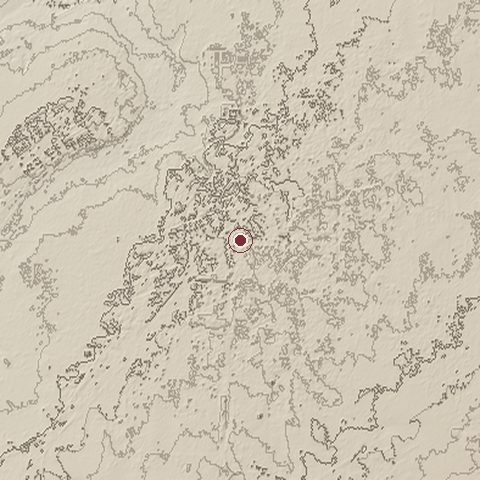
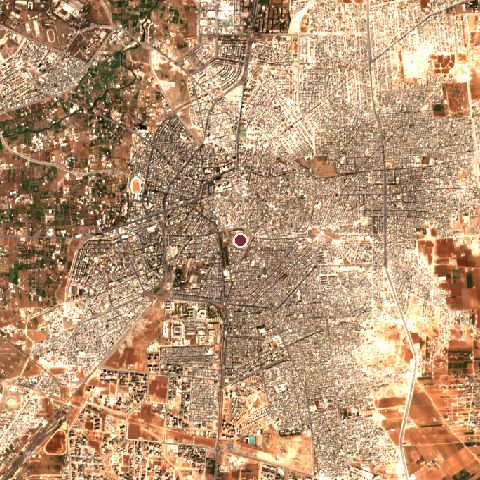
The recorded site stands at about 531 m; within 10.0 km the ground runs from 459 to 586 m, 127 m of relief, gently rolling country and today it is 76% built-up, 14% cropland, 6% tree cover.
Elevation from the Copernicus DEM GLO-30 (ESA, Airbus); land cover from ESA WorldCover 2021 (CC BY 4.0), within about 5 km of the recorded site. Computed, not recorded.Nearest engagements
- First Battle of Homs 1260, same recorded site
- Siege of Emesa AD 635, same recorded site
- Siege of Emesa AD 638, same recorded site
- Siege of Emesa AD 253, same recorded site
- Battle of Emesa AD 272, 0.5 km SW
Contested ground: this site was fought over 7 times between AD 253 and 1299.
In the same war
- Before: Battle of Kōan 1281
- After: Battle of Sind 1298
- All 30 engagements of Mongol invasions and conquests
Elsewhere in 1281
- Battle of the Tafna Algeria
Second Battle of Homs is one of 590 engagements of the 13th century in the atlas and one of 133 in present-day Syria.
Sources
Identity, coordinates, dates and the war from Wikidata Q2726734, released under CC0. Result, belligerents, commanders, strength and casualties from the infobox of the English Wikipedia article Second Battle of Homs, revision 1370736265, read 2026-11-14, licensed CC BY-SA 4.0; the article's text is not reproduced here. Present-day country and state from Natural Earth. Dates before 1582 follow the Julian calendar as recorded.