battle, major, interwar and Second World War
Battle of Lake Khasan
Battle of Lake Khasan was a battle fought in 1938 at Zaozyornaya, in what is now Soviet Union. It was part of Soviet–Japanese border conflicts, which ran from 1932 to 1939. The recorded result: Ceasefire.
See it on the globe Read the article

Where it sits in Soviet–Japanese border conflicts
Record
| Date | 1938 (year precision) to 11 August 1938 | |
|---|---|---|
| Place | Zaozyornaya, Soviet Union 42.436N, 130.611E | |
| Kind | Battle, interwar and Second World War | |
| Territorial change | Japan agrees to withdraw its forces from the disputed territory; Soviet-Japanese border set at the Tumen River. | |
| Strength | 22,950; 354 tanks; 13 self-propelled guns; 237 artillery pieces; 70 fighters; 180 bombers | 7,000–7,300; 37 artillery pieces |
| Casualties and losses | 792 killed & missing; 3,279 wounded or sick; 46+ tanks destroyed; (Soviet sources); 96 tanks destroyed or crippled; (Japanese sources) | 526 killed; 913 wounded (Japanese sources); 3,000 killed & missing (Soviet claim) |
| Commanders |
|
|

The ground today
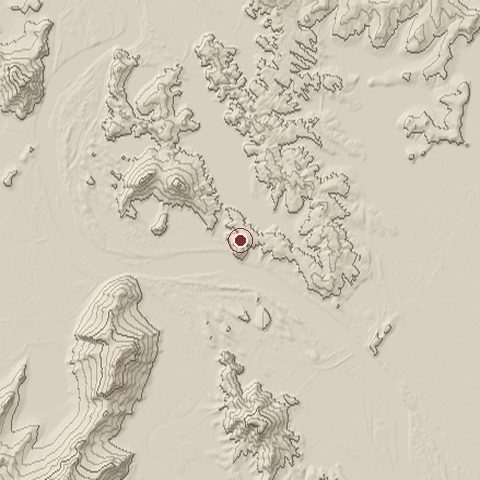
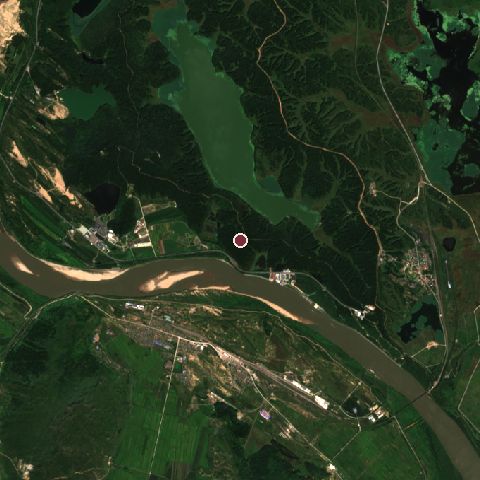
The recorded site stands at about 54 m; within 10.0 km the ground runs from 0 to 235 m, 235 m of relief, hilly country and today it is 36% tree cover, 21% grassland, 18% cropland.
Elevation from the Copernicus DEM GLO-30 (ESA, Airbus); land cover from ESA WorldCover 2021 (CC BY 4.0), within about 5 km of the recorded site. Computed, not recorded.Nearest engagements
- Battle of Ongjin 1950, 99 km SW
- Battle of Pochonbo 1937, 216 km SW
- Battle of Changjin Reservoir 1950, 362 km SW
- Blockade of Wonsan 1951, 453 km SW
- Siege of Changchun 1948, 468 km W
In the same war
- Before: Kanchazu Island incident 1937
- After: Battle of Zaozernaya Hill 1938
- All 9 engagements of Soviet–Japanese border conflicts
Elsewhere in 1938
- Battle of the Ebro Spain
- Battle of Wuhan People's Republic of China
- Battle of Taierzhuang China
- Catalonia Offensive Spain
- Battle of Xuzhou People's Republic of China
Combat data (CDB90)
| Attacker: SOV SPECIAL FAR EASTERN ARMY(-) | Defender: JAP 19TH INF DIV(+) | |
| Strength | 20,000 | 8,000 |
| Casualties | 4,000 (20.0%) | 1,100 (13.8%) |
| Mission accomplishment, 1 to 10 | 5 | 6 |
| Outcome | defender won | |
| Duration | 2 days | |
| Front width | 6 km | 6 km |
| Attacker advanced | 1 km | |
From the US Army Concepts Analysis Agency Database of Battles (CDB90, battle 258), public domain, in the CC0 tidy edition by Jeffrey B. Arnold. Figures are the database's estimates, compiled in 1990 from published histories, and may differ from the Wikipedia infobox above.
Battle of Lake Khasan is one of 2,997 engagements of the 20th century in the atlas and one of 32 in present-day Soviet Union.
Sources
Identity, coordinates, dates and the war from Wikidata Q697579, released under CC0. Result, belligerents, commanders, strength and casualties from the infobox of the English Wikipedia article Battle of Lake Khasan, revision 1375725124, read 2026-11-14, licensed CC BY-SA 4.0; the article's text is not reproduced here. Present-day country and state from Natural Earth. Dates before 1582 follow the Julian calendar as recorded.