battle, landmark, interwar and Second World War
Battles of Khalkhin Gol
Battles of Khalkhin Gol was a battle fought on 11 May 1939 at Khalkhyn River, in what is now Mongolia; it lasted 4 months. It was part of Soviet–Japanese border conflicts, which ran from 1932 to 1939. The recorded result: Soviet–Mongolian victory.
See it on the globe Read the article

Where it sits in Soviet–Japanese border conflicts
Record
| Date | 11 May 1939 to 16 September 1939 | |
|---|---|---|
| Place | Khalkhyn River, Mongolia 47.730N, 118.590E | |
| Kind | Battle, interwar and Second World War | |
| Territorial change | Status quo ante bellum; enforcement of border claims in accordance with the Soviet and Mongolian interpretation. | |
| Strength | 57,000 (late August); 498 to 550 tanks; 385–450 armored cars; 900 aircraft (total), peak strength 623; 546 artillery pieces (156 100mm+); 4,000 trucks; 1,921 horses and camels (Mongol only) | 25,000 (late August); 73 tanks; 19 tankettes; Tanks withdrawn after July action; 400 aircraft (total), peak strength 255; 277 artillery pieces (50 100mm+); 2,000 trucks (20 August); 2,708 horses |
| Casualties and losses | Manpower total: 26,211–28,169 casualties9,703 dead and missing,; 15,251 wounded,; 701 to 2,225 hospitalized due to disease.; Boris Sokolov writes that according to E. I. Smirnov's "Война и военная медицина. 1939–1945 годы" ("War and military medicine. 1939–1945") the figure of 701 only accounts for sick patients who were treated in hospitals of the Transbaikal Military District and that the total number of ill during the campaign was 2,225.; 24,903 combat; 752–2,276 noncombat; 556–990; Equipment: 250 aircraft lost; 253 tanks destroyed or crippled; 133 armored cars destroyed; 96 mortars and artillery; 49 tractors and prime movers; 652 trucks and other motor vehicles; significant animal casualties | Manpower total: ~20,000 casualties'Japanese military record: 8,440 killed,; 8,766 wounded; Soviet claim: 60,000 killed and wounded,; 3,000 captured; See #Casualties.; 17,364–17,716 combat; 2,350 noncombat; 2,895 (Soviet claim); Equipment: 162 aircraft lost; 29 tanks destroyed or crippled; 7 tankettes destroyed; 72 artillery pieces (field guns only); 2,330 horses killed, injured, or sick; significant motor vehicle losses |
| Commanders |
|
|

The ground today
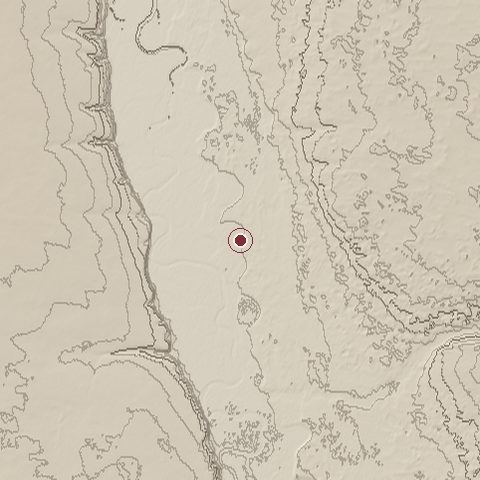
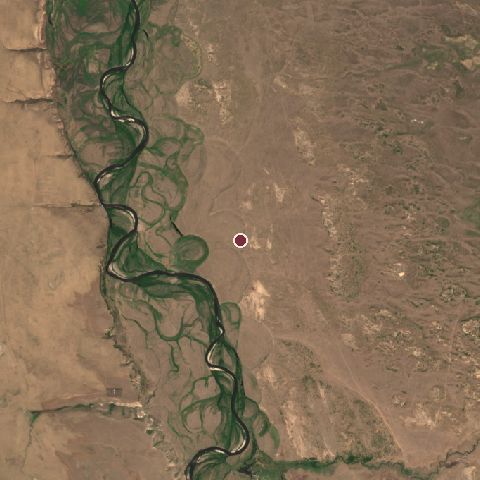
The recorded site stands at about 668 m; within 10.0 km the ground runs from 657 to 749 m, 91 m of relief, gently rolling country and today it is 93% grassland, 3% wetland.
Elevation from the Copernicus DEM GLO-30 (ESA, Airbus); land cover from ESA WorldCover 2021 (CC BY 4.0), within about 5 km of the recorded site. Computed, not recorded.Nearest engagements
- Battle of Nomonhan 1939, 13 km E
- Battle of Buyur Lake 1388, 60 km NW
- Battle of Ulan Butung 1690, 600 km S
- Siege of Changchun 1948, 666 km SE
- Battle of Mukden 1905, 764 km SE
In the same war
- Before: Dong'an Town Incident 1939
- After: Battle of Nomonhan 11 May 1939
- All 9 engagements of Soviet–Japanese border conflicts
Elsewhere in 1939
Combat data (CDB90)
| Attacker: SOV 1ST ARMY GROUP | Defender: JAP 6TH ARMY(-) | |
| Strength | 57,000 | 30,000 |
| Casualties | 10,000 (17.5%) | 11,500 (38.3%) |
| Mission accomplishment, 1 to 10 | 7 | 4 |
| Outcome | attacker won | |
| Duration | 2 days | |
| Front width | 50 km | 60 km |
| Attacker advanced | 21.6 km | |
From the US Army Concepts Analysis Agency Database of Battles (CDB90, battle 260), public domain, in the CC0 tidy edition by Jeffrey B. Arnold. Figures are the database's estimates, compiled in 1990 from published histories, and may differ from the Wikipedia infobox above.
Battles of Khalkhin Gol is one of 2,997 engagements of the 20th century in the atlas and one of 10 in present-day Mongolia.
Sources
Identity, coordinates, dates and the war from Wikidata Q188925, released under CC0. Result, belligerents, commanders, strength and casualties from the infobox of the English Wikipedia article Battles of Khalkhin Gol, revision 1383080589, read 2026-11-14, licensed CC BY-SA 4.0; the article's text is not reproduced here. Present-day country and state from Natural Earth. Dates before 1582 follow the Julian calendar as recorded.