battle, landmark, medieval
Umayyad conquest of Hispania
Umayyad conquest of Hispania was a battle fought in AD 711 at Iberian Peninsula, in what is now Spain; it lasted about 15 years. Its exact site is not recorded; the atlas places it at Iberian Peninsula. It was part of Muslim conquests, which ran from AD 622 to AD 750. The recorded result: Umayyad victory.
See it on the globe Read the article
Where it sits in Muslim conquests
Record
| Date | AD 711 (year precision) to AD 726 | |
|---|---|---|
| Place | Iberian Peninsula, Spain 40.240N, 4.239W | |
| Kind | Battle, medieval | |
| Territorial change | Establishment of Al-Andalus | |
| Commanders |
|
|
The ground today
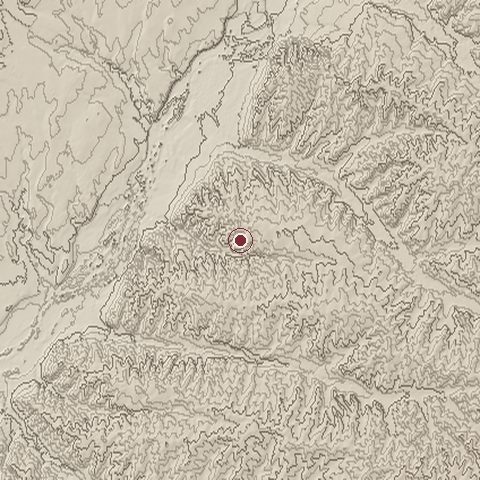
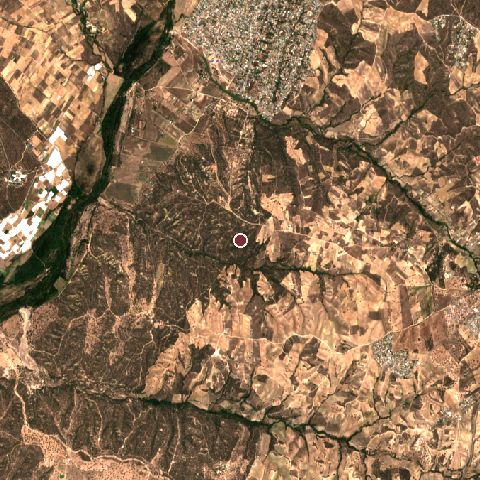
The recorded site stands at about 525 m; within 10.0 km the ground runs from 432 to 613 m, 181 m of relief, hilly country and today it is 51% grassland, 28% tree cover, 15% cropland.
Elevation from the Copernicus DEM GLO-30 (ESA, Airbus); land cover from ESA WorldCover 2021 (CC BY 4.0), within about 5 km of the recorded site. Computed, not recorded.Nearest engagements
- Battle of Brunete 1937, 28 km NE
- Second Battle of the Corunna Road 1936, 35 km NE
- Battle of Majadahonda 1812, 40 km NE
- First Battle of the Corunna Road 1936, 42 km NE
- Siege of Toledo 1090, 46 km SE
In the same war
- Before: Muslim attacks in the Balearic Islands AD 707
- After: Umayyad invasion of Gaul AD 719
- All 19 engagements of Muslim conquests
Elsewhere in AD 711
- Battle of Guadalete Spain
- Battle of Bolchu China
- Siege of Córdoba Spain
- Battle of Écija Spain
Umayyad conquest of Hispania is one of 158 engagements of the 8th century in the atlas and one of 1,204 in present-day Spain.
Sources
Identity, coordinates, dates and the war from Wikidata Q1455917, released under CC0. Result, belligerents, commanders, strength and casualties from the infobox of the English Wikipedia article Muslim conquest of the Iberian Peninsula, revision 1383912812, read 2026-11-15, licensed CC BY-SA 4.0; the article's text is not reproduced here. Present-day country and state from Natural Earth. Dates before 1582 follow the Julian calendar as recorded.