Atlas of Battles

battle, landmark, ancient

Battle of the Granicus

Battle of the Granicus was a battle fought in May 334 BC at Biga River, in what is now Turkey. It was part of the Wars of Alexander the Great, which ran from 336 BC to 323 BC. The recorded result: Macedonian victory.

See it on the globe Read the article

Les Grecs franchissent le Granique qui leur fermait l'entrée de l'Asie, malgré les troncs d'arbres amassés sur les bords du fleuve. Le tableau mêle des éléments de la Bataille de Cascina de Michel-Ang
Les Grecs franchissent le Granique qui leur fermait l'entrée de l'Asie, malgré les troncs d'arbres amassés sur les bords du fleuve. Le tableau mêle des éléments de la Bataille de Cascina de Michel-Ang. Charles Le Brun / Abraham Genoels, Public domain, via Wikimedia Commons.
FoughtMay 334 BC
WhereBiga River, Turkey40.228N, 27.242E
OutcomeMacedonian victory
BelligerentsMacedon; Hellenic LeagueagainstAchaemenid Empire
Part ofWars of Alexander the Great336 BC to 323 BC

Where it sits in the Wars of Alexander the Great

Battle of Thessaly, 336 BCSiege of Halicarnassus, 334 BCSiege of Miletus, 334 BCSiege of Termessos, 334 BCBattle of the Granicus, 334 BCBattle of Issus, 333 BCSiege of Tyre, 332 BCSiege of Gaza, 332 BCBattle of Gaugamela, 331 BCBattle of the Uxian Defile, 331 BCBattle of the Persian Gate on the Mountain, 330 BCSiege of Cyropolis, 329 BCBattle of Polytimetus, 329 BCBattle of Jaxartes, 329 BCBattle of Gabai, 328 BCSiege of the Sogdian Rock, 327 BC336 BC327 BCBattle of the Granicus, 334 BC
16 placed engagements of the Wars of Alexander the Great in time order; taller ticks are more widely documented. Each tick is a link.

Record

DateMay 334 BC (month precision)
PlaceBiga River, Turkey
40.228N, 27.242E
KindBattle, ancient
Territorial changeAlexander the Great gains half of Asia Minor
Commanders
  • Alexander the Great
  • Parmenion
  • Philotas
  • Amyntas (son of Arrhabaeus)
  • Socrates of Macedon
  • Nicanor (son of Parmenion)
  • Arsites
  • Memnon of Rhodes
  • Arsames (satrap of Cilicia)
  • Dimitriadis
  • Spithridates
  • Rheomithres
Battle of the GranicusBattle of the GranicusBattle of GallipoliBattle of BulairSiege of CyzicusFall of GallipoliBattle of GallipoliBattle of BulairFall of GallipoliBalıkesirTekirdağÇanakkaleMitiliniLüleburgazAlexandroupoliIstanbulKomatini100 km40.228N, 27.242E
The recorded site, with the nearest other engagements in the atlas. Present-day coastlines, rivers and borders; towns from Natural Earth.
Battle of the Granicus
Battle of the Granicus. Frank Martini. Cartographer, Department of History, United States Military Academy, CC BY-SA 3.0, via Wikimedia Commons.

The ground today

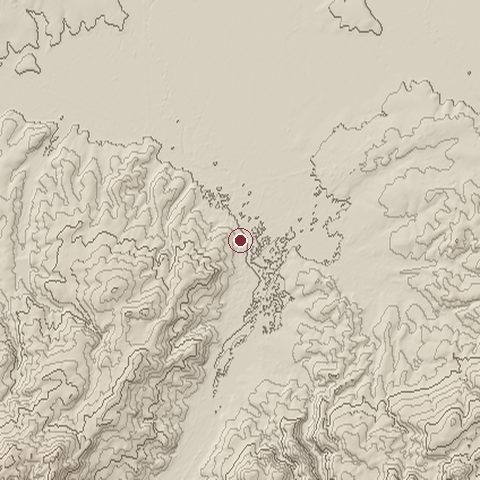
Relief of the ground around the site of Battle of the Granicus
Relief within about 10.0 km of the site, contours every 25 m. Copernicus DEM GLO-30, ESA.
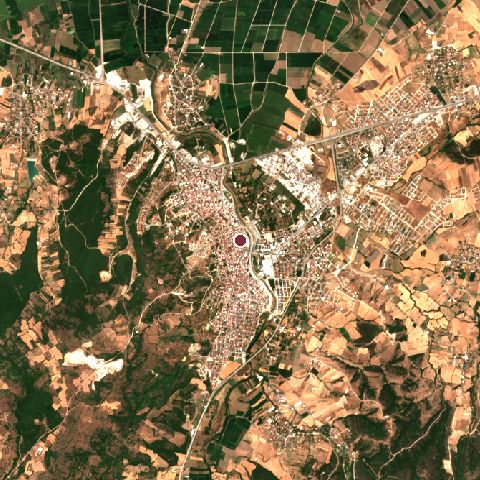
Satellite view of the site of Battle of the Granicus today
The same ground from Sentinel-2 on 2025-07-22. Contains modified Copernicus Sentinel data 2025.

The recorded site stands at about 38 m; within 10.0 km the ground runs from 11 to 410 m, 399 m of relief, hilly country and today it is 30% cropland, 24% tree cover, 22% grassland.

cropland: 30%tree cover: 24%grassland: 22%built-up: 19%shrubland: 4%cropland 30%tree cover 24%grassland 22%built-up 19%shrubland 4%
west to east, 10.0 km18 to 143 mnorth to south, 10.0 km14 to 207 m
Elevation from the Copernicus DEM GLO-30 (ESA, Airbus); land cover from ESA WorldCover 2021 (CC BY 4.0), within about 5 km of the recorded site. Computed, not recorded.

Nearest engagements

In the same war

Battle of the Granicus is one of 137 engagements of the 4th century BC in the atlas and one of 622 in present-day Turkey.

Sources

Identity, coordinates, dates and the war from Wikidata Q192938, released under CC0. Result, belligerents, commanders, strength and casualties from the infobox of the English Wikipedia article Battle of the Granicus, revision 1372697241, read 2026-11-14, licensed CC BY-SA 4.0; the article's text is not reproduced here. Present-day country and state from Natural Earth. Dates before 1582 follow the Julian calendar as recorded.