battle, major, medieval
Battle of Stoke Field
Battle of Stoke Field was a battle fought on 16 June 1487 at East Stoke, in what is now United Kingdom. It was part of the Wars of the Roses, which ran from 1455 to 1487. The recorded result: Tudor victory; End of the Wars of the Roses. Recorded strength: 12,000 against 8,000.
See it on the globe Read the article

Where it sits in the Wars of the Roses
Record
| Date | 16 June 1487 | |
|---|---|---|
| Place | East Stoke, United Kingdom 53.035N, 0.888W | |
| Kind | Battle, medieval | |
| Strength | 12,000 | 8,000 |
| Casualties and losses | 300–3,000 | 4,000 |
| Commanders |
|
|
The ground today
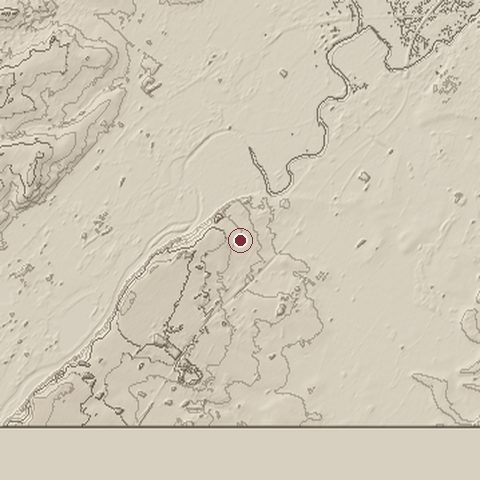
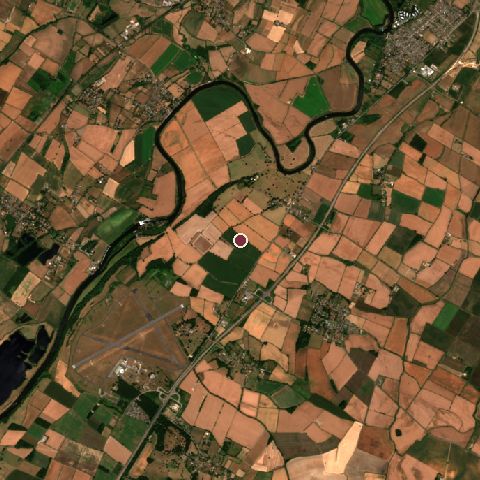
The recorded site stands at about 39 m; within 10.0 km the ground runs from 0 to 79 m, 79 m of relief, gently rolling country and today it is 56% cropland, 28% grassland, 10% tree cover.
Elevation from the Copernicus DEM GLO-30 (ESA, Airbus); land cover from ESA WorldCover 2021 (CC BY 4.0), within about 5 km of the recorded site. Computed, not recorded.Nearest engagements
- Storming of Shelford House 1645, 9.4 km SW
- Battle of Mapperley Hills 1842, 18 km W
- Battle of Lincoln 1141, 31 km NE
- Battle of Lincoln 1217, 32 km NE
- Siege of Lincoln 1644, 33 km NE
In the same war
- Before: Battle of Bosworth Field 22 August 1485
- All 22 engagements of Wars of the Roses
Elsewhere in 1487
- Battle of Crevola Italy
- Siege of Málaga Spain
- Battle of Kopystrzyń Ukraine
- Battle of Calliano Italy
- Siege of Wiener Neustadt Austria
Historic England registers this as the Battle of Stoke (Field) battlefield (entry 1000036), 269 hectares, under the Open Government Licence.
Battle of Stoke Field is one of 720 engagements of the 15th century in the atlas and one of 695 in present-day United Kingdom.
Sources
Identity, coordinates, dates and the war from Wikidata Q1495481, released under CC0. Result, belligerents, commanders, strength and casualties from the infobox of the English Wikipedia article Battle of Stoke Field, revision 1370274765, read 2026-11-14, licensed CC BY-SA 4.0; the article's text is not reproduced here. Present-day country and state from Natural Earth. Battlefield boundary and area from Historic England (Open Government Licence). Dates before 1582 follow the Julian calendar as recorded.