battle, major, early modern
Battle of Slankamen
Battle of Slankamen was a battle fought on 19 August 1691 at Stari Slankamen, in what is now Serbia. It was part of the Great Turkish War, which ran from 1683 to 1699. The recorded result: Imperial victory; Imperial conquest of most of Croatia. Recorded strength: 20,000–33,000 men; 90 guns against 50,000 men; 158 guns.
See it on the globe Read the article

Where it sits in the Great Turkish War
Record
| Date | 19 August 1691 | |
|---|---|---|
| Place | Stari Slankamen, Serbia 45.133N, 20.233E | |
| Kind | Battle, early modern | |
| Strength | 20,000–33,000 men; 90 guns | 50,000 men; 158 guns |
| Casualties and losses | 7,300 | 25,000 |
| Commanders |
|
|


The ground today
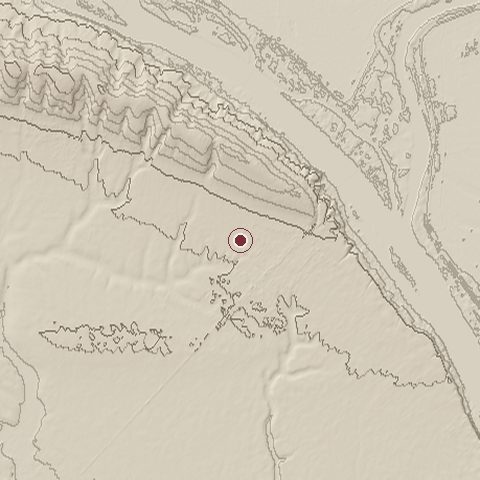
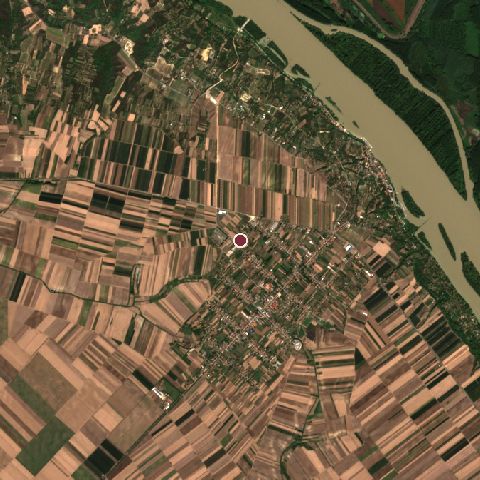
The recorded site stands at about 135 m; within 10.0 km the ground runs from 68 to 270 m, 202 m of relief, hilly country and today it is 51% cropland, 25% tree cover, 13% grassland.
Elevation from the Copernicus DEM GLO-30 (ESA, Airbus); land cover from ESA WorldCover 2021 (CC BY 4.0), within about 5 km of the recorded site. Computed, not recorded.Nearest engagements
- Battle of Perlasz 1848, 15 km NE
- Battle of Karlóca 1848, 24 km W
- Battle of Káty 1849, 30 km NW
- Siege of Petrovaradin 1526, 32 km NW
- Battle of Petrovaradin 1716, 32 km NW
In the same war
- Before: Siege of Belgrade 2 October 1690
- After: Siege of Belgrade 1693
- All 22 engagements of Great Turkish War
Elsewhere in 1691
- Battle of Leuze Belgium
- Battle of Aughrim Ireland
- Siege of Cuneo Italy
- Siege of Mons Belgium
- Battle of Nadaun India
Battle of Slankamen is one of 1,470 engagements of the 17th century in the atlas and one of 100 in present-day Serbia.
Sources
Identity, coordinates, dates and the war from Wikidata Q690481, released under CC0. Result, belligerents, commanders, strength and casualties from the infobox of the English Wikipedia article Battle of Slankamen, revision 1370589530, read 2026-11-14, licensed CC BY-SA 4.0; the article's text is not reproduced here. Present-day country and state from Natural Earth. Dates before 1582 follow the Julian calendar as recorded.