battle, landmark, early modern
Battle of Plassey
Battle of Plassey was a battle fought on 23 June 1757 at Palashi, in what is now India. The recorded result: British victory; Mir Jafar becomes the Nawab of Bengal and Bengal becomes a British puppet state.
See it on the globe Read the article

Record
| Date | 23 June 1757 | |
|---|---|---|
| Place | Palashi, India 23.800N, 88.250E | |
| Kind | Battle, early modern | |
| Territorial change | Bengal came under de facto control of the British East India Company | |
| Strength | East India Company:750 British soldiers; 100 Topasses; 2,100 Indian sepoys; 100 gunners; 50 sailors; 8 cannon (six field artillery pieces and 2 howitzers)Total: 3,100 men | Bengal:16,000–18,000 cavalry; 35,000 infantry; 53 field pieces (mostly 32, 24, and 18-pounder pieces); France:about 40–50 French workers; 50 field piecesTotal: 50,000 men; more than 40–50 men (including artillerymen) |
| Casualties and losses | 27 killed; 50 wounded | 500 killed and wounded |
| Commanders |
|
|


The ground today
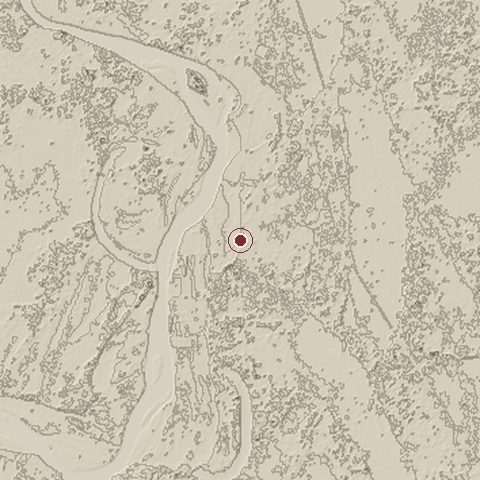
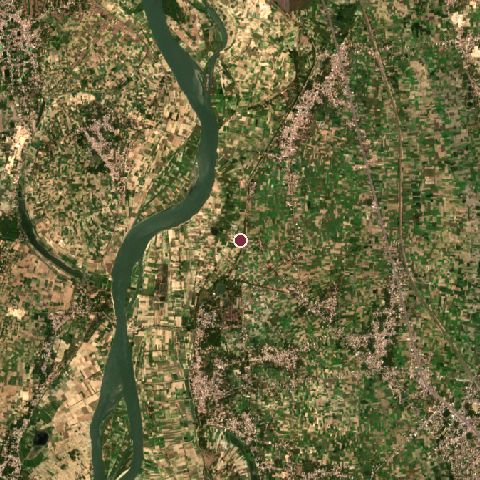
The recorded site stands at about 18 m; within 10.0 km the ground runs from 9 to 30 m, 20 m of relief, flat country and today it is 63% cropland, 25% tree cover, 6% water.
Elevation from the Copernicus DEM GLO-30 (ESA, Airbus); land cover from ESA WorldCover 2021 (CC BY 4.0), within about 5 km of the recorded site. Computed, not recorded.Nearest engagements
- Battle of Giria 1740, 82 km N
- Battle of Chinsurah 1759, 101 km S
- Siege of Hooghly 1632, 101 km S
- Attack in Hooghly 1671, 101 km S
- Battle of Bedara 1759, 101 km S
Elsewhere in 1757
- Battle of Rossbach Germany
- Battle of Kolín Czech Republic
- Battle of Leuthen Poland
- Battle of Prague Czech Republic
- Siege of Fort William Henry United States
Combat data (CDB90)
| Attacker: BENGALI ARMY | Defender: BR ARMY | |
| Strength | 50,050 | 2,975 |
| Casualties | 500 (1.0%) | 63 (2.1%) |
| Mission accomplishment, 1 to 10 | 2 | 9 |
| Outcome | defender won | |
| Duration | 1 day | |
| Front width | 3.2 km | 0.7 km |
| Attacker advanced | -1 km | |
From the US Army Concepts Analysis Agency Database of Battles (CDB90, battle 66), public domain, in the CC0 tidy edition by Jeffrey B. Arnold. Figures are the database's estimates, compiled in 1990 from published histories, and may differ from the Wikipedia infobox above.
Battle of Plassey is one of 2,009 engagements of the 18th century in the atlas and one of 354 in present-day India.
Sources
Identity, coordinates, dates and the war from Wikidata Q203233, released under CC0. Result, belligerents, commanders, strength and casualties from the infobox of the English Wikipedia article Battle of Plassey, revision 1381150568, read 2026-11-14, licensed CC BY-SA 4.0; the article's text is not reproduced here. Present-day country and state from Natural Earth. Dates before 1582 follow the Julian calendar as recorded.