battle, major, medieval
Battle of Myriokephalon
Battle of Myriokephalon was a battle fought on 17 September 1176 at Lake Beyşehir, in what is now Turkey. It was part of the Byzantine–Seljuq Wars, which ran from 1048 to 1308. The recorded result: Seljuk victory; Military balance maintained. Recorded strength: 25,000–40,000 against Unknown (likely smaller).
See it on the globe Read the article

Where it sits in the Byzantine–Seljuq Wars
Record
| Date | 17 September 1176 | |
|---|---|---|
| Place | Lake Beyşehir, Turkey 37.911N, 31.947E | |
| Kind | Battle, medieval | |
| Strength | 25,000–40,000 | Unknown (likely smaller) |
| Casualties and losses | Approx. 1 of the army or half of those troops who were directly attacked (left and right wings only),; possibly heavier | Unknown |
| Commanders |
|
|
The ground today
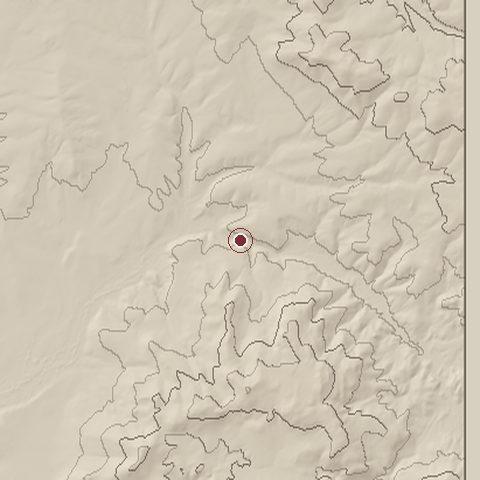
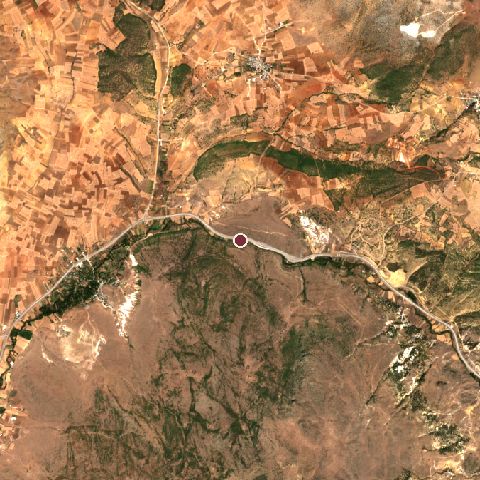
The recorded site stands at about 1,257 m; within 10.0 km the ground runs from 0 to 1,709 m, 1,709 m of relief, mountainous country and today it is 69% grassland, 22% cropland, 6% tree cover.
Elevation from the Copernicus DEM GLO-30 (ESA, Airbus); land cover from ESA WorldCover 2021 (CC BY 4.0), within about 5 km of the recorded site. Computed, not recorded.Nearest engagements
- Battle of Iconium 1190, 47 km E
- Battle of Philomelion 1116, 68 km NW
- Battle of Philomelion 1190, 68 km NW
- Siege of Manzikert 1054, 121 km N
- Siege of Sozopolis 1120, 131 km W
In the same war
- Before: Fall of Turbessel 1151
- After: Battle of Hyelion and Leimocheir 1177
- All 32 engagements of Byzantine–Seljuq Wars
Elsewhere in 1176
- Battle of Legnano Italy
Battle of Myriokephalon is one of 438 engagements of the 12th century in the atlas and one of 622 in present-day Turkey.
Sources
Identity, coordinates, dates and the war from Wikidata Q730553, released under CC0. Result, belligerents, commanders, strength and casualties from the infobox of the English Wikipedia article Battle of Myriokephalon, revision 1384624920, read 2026-11-14, licensed CC BY-SA 4.0; the article's text is not reproduced here. Present-day country and state from Natural Earth. Dates before 1582 follow the Julian calendar as recorded.