battle, landmark, medieval
Battle of Las Navas de Tolosa
Battle of Las Navas de Tolosa was a battle fought on 16 July 1212 at Santa Elena, in what is now Spain. It was part of the Almohad wars in the Iberian Peninsula, which ran from 1172 to 1212. The recorded result: Christian victory. Recorded strength: 12,000–14,000 against 22,000–30,000; "Many hundreds of thousands".
See it on the globe Read the article

Where it sits in the Almohad wars in the Iberian Peninsula
Record
| Date | 16 July 1212 | |
|---|---|---|
| Place | Santa Elena, Spain 38.343N, 3.549W | |
| Kind | Battle, medieval | |
| Territorial change | Fall of Ubeda and Baeza | |
| Strength | 12,000–14,000 | 22,000–30,000; "Many hundreds of thousands" |
| Casualties and losses | ~2,000 | Very high |
| Commanders |
|
|


The ground today
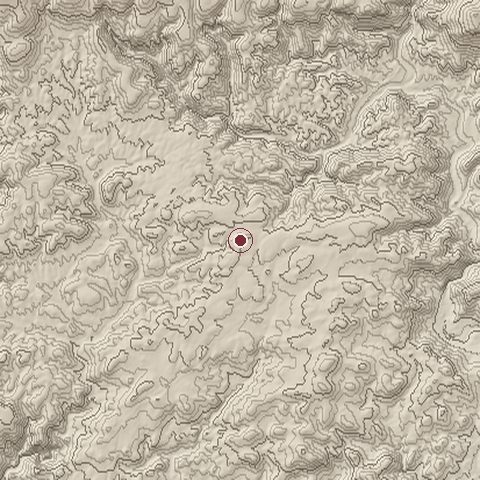
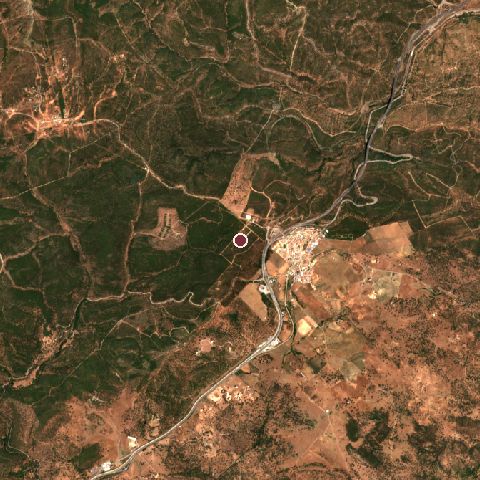
The recorded site stands at about 792 m; within 10.0 km the ground runs from 475 to 1,049 m, 574 m of relief, steep country and today it is 74% tree cover, 20% grassland, 3% built-up.
Elevation from the Copernicus DEM GLO-30 (ESA, Airbus); land cover from ESA WorldCover 2021 (CC BY 4.0), within about 5 km of the recorded site. Computed, not recorded.Nearest engagements
- Battle of Bailén 1808, 35 km SW
- Battle of Cantich 1009, 39 km S
- Fall of Ubeda 1212, 40 km SE
- Siege of Santuario de Nuestra Señora de la Cabeza 1936, 45 km W
- Siege of Iliturgi 215 BC, 47 km SW
In the same war
- Before: Siege of Al-Dāmūs 1210
- After: Fall of Ubeda 16 July 1212
- All 22 engagements of Almohad wars in the Iberian Peninsula
Elsewhere in 1212
- Siege of Penne-d'Agenais France
- Siege of Cahuzac France
- Siege of Briatexte France
- Siege of Puylaurens France
- Siege of Saint-Antonin France
Battle of Las Navas de Tolosa is one of 590 engagements of the 13th century in the atlas and one of 1,070 in present-day Spain.
Sources
Identity, coordinates, dates and the war from Wikidata Q219697, released under CC0. Result, belligerents, commanders, strength and casualties from the infobox of the English Wikipedia article Battle of Las Navas de Tolosa, revision 1385033251, read 2026-11-14, licensed CC BY-SA 4.0; the article's text is not reproduced here. Present-day country and state from Natural Earth. Dates before 1582 follow the Julian calendar as recorded.